Quick Answer
Schools bring together large groups of students, teachers, and staff who share classrooms, facilities, equipment, and everyday spaces. This regular interaction makes hygiene an important part of maintaining a suitable learning environment. Germs can spread through direct contact, respiratory droplets, and contaminated surfaces, making consistent cleaning, appropriate disinfection, and access to handwashing supplies important considerations.
Professional janitorial services help schools establish cleaning routines that address these needs. From maintaining washroom hygiene to managing frequently touched surfaces, food-related messes, and moisture, a structured approach can support healthier conditions for students and staff. Educational institutions in Mississauga can benefit from cleaning plans that reflect their student population and facility requirements.
Key Takeaways
- Shared school environments create frequent opportunities for germs to spread.
- Regular cleaning and appropriate disinfection help manage contamination on frequently touched surfaces.
- Clean washrooms and adequately stocked handwashing facilities support everyday hygiene.
- Food residue, waste, and moisture require timely attention in educational facilities.
- Cleaning products and methods should be suitable for school environments and used according to instructions.
- Customized cleaning plans help schools in Mississauga address their specific hygiene requirements.
Why Health and Hygiene Matter in School Environments
Students spend several hours each day in educational facilities, interacting with classmates, teachers, and shared surroundings. They touch desks, door handles, learning materials, switches, and other commonly used objects. Younger children may also have frequent hand-to-face contact, making everyday hygiene practices particularly important.
When many people use the same facilities, respiratory illnesses and infections can spread through several routes. Some germs can pass through close contact or respiratory particles, while others may transfer through contaminated hands and surfaces.
Cleaning cannot eliminate every source of infection or guarantee that illnesses will not spread. However, maintaining clean surroundings and following appropriate hygiene practices can help reduce avoidable contamination.
A healthy learning environment also depends on more than visible cleanliness. Washroom maintenance, handwashing facilities, waste management, food-related hygiene, and moisture control all contribute to the overall condition of a school.
For educational institutions in Mississauga, addressing these areas through a consistent maintenance plan can help support the everyday needs of students, employees, and visitors.
How Janitorial Services Help Manage Germs in Schools
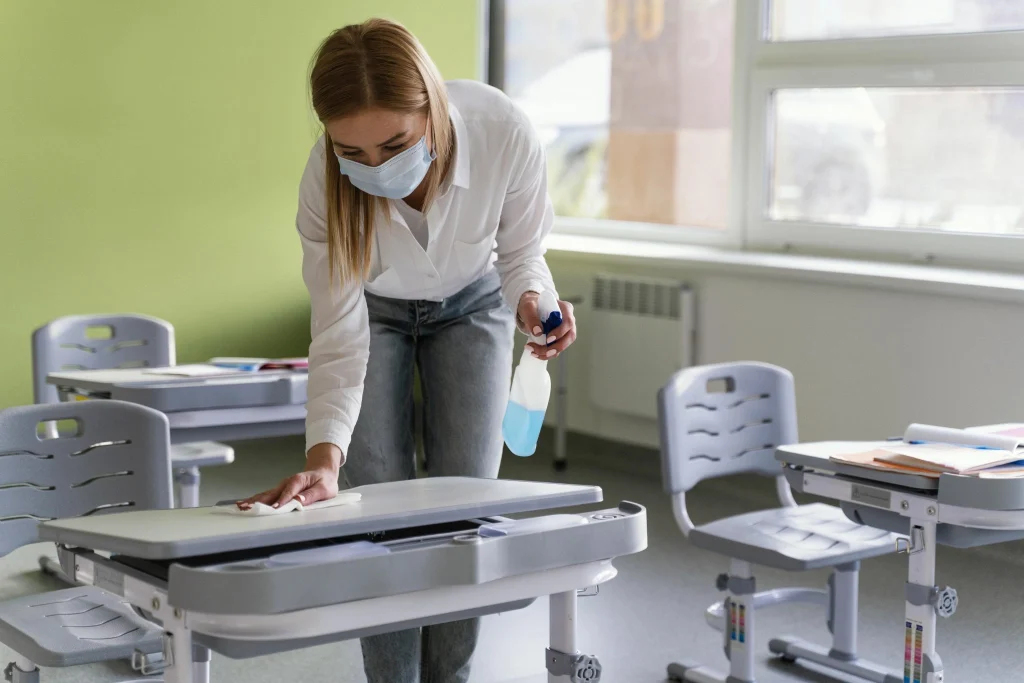
Schools contain many shared surfaces that are touched repeatedly throughout the day. Door handles, handrails, desks, switches, shared learning equipment, and other frequently used objects can become contaminated through regular contact.
A structured cleaning routine helps address these surfaces before dirt and contamination accumulate. However, cleaning and disinfection serve different purposes.
Cleaning removes dirt, debris, and some germs from surfaces. Disinfection uses appropriate products to inactivate microorganisms on surfaces when applied according to the product instructions. Depending on the surface and the school’s hygiene requirements, both processes may be necessary.
A school cleaning plan may include:
- Regular dusting of desks, shelves, and ledges, and vacuuming or mopping to control tracked-in dirt
- Attention to door handles, switches, and handrails
- Cleaning shared equipment according to its material and use
- Disinfection of appropriate high-touch surfaces
- Regular waste collection
- Additional attention to areas following illness-related incidents, based on applicable protocols
Regular dusting and floor care also keep dust and tracked-in dirt from building up, which matters especially for students with allergies or asthma.
The cleaning team should use products suitable for the intended surfaces and follow the required application and contact times. Schools should also communicate any specific hygiene procedures that need to be followed.
This approach helps make surface hygiene a planned responsibility rather than something addressed only when an area appears dirty.
1. Maintaining Washroom Hygiene and Handwashing Facilities
School washrooms require consistent attention because they are used by students and staff throughout the day. Toilets, sinks, taps, flush handles, door handles, and other fixtures receive frequent contact and can become contaminated.
A poorly maintained washroom can also discourage students from using the facilities properly. Empty soap dispensers, unavailable paper towels, overflowing waste bins, and unpleasant odours can affect the overall hygiene experience.
Routine washroom maintenance should include:
- Cleaning toilets, sinks, taps, and other fixtures
- Addressing frequently touched surfaces
- Cleaning floors and removing visible residue
- Emptying waste bins regularly
- Checking soap and paper towel dispensers
- Replenishing essential supplies when needed
- Reporting leaks, blockages, or maintenance concerns
Handwashing is another important part of school hygiene. Students should have access to functioning sinks, soap, and suitable drying facilities. Schools can reinforce handwashing at appropriate times, such as after using the washroom, before eating, and after activities that involve shared materials.
Cleaning teams can help maintain the facilities and replenish supplies, while school staff can support students in developing good hand hygiene habits.
2. Reducing Hygiene Risks Around Food, Waste, and Shared Eating Spaces
Food-related activities create specific cleaning requirements in educational facilities. Crumbs, spills, food residue, and waste can accumulate when eating areas are not maintained properly.
Food residue left on surfaces or floors can attract pests and create unpleasant conditions. Food packaging, paper, and tissues also pile up quickly in busy schools, so bins in classrooms, hallways, and eating areas should be emptied daily to prevent odours and pests.
Cleaning routines should address tables, counters, floors, accessible surfaces, and waste collection points. Spills should be dealt with promptly, and surfaces used for food-related activities should be cleaned using suitable products and methods.
These practices are relevant to schools of different sizes, whether students bring meals from home or use organized food services. Maintaining appropriate hygiene around eating activities helps support a cleaner environment and reduces avoidable sanitation concerns.
3. Managing Moisture, Dampness, and Indoor Conditions
Moisture is another issue schools should consider when maintaining a healthy building. Wet floors, leaks, condensation, and damp materials can create maintenance concerns if they are not addressed promptly.
Persistent moisture can contribute to mould growth, particularly when materials remain damp and ventilation is inadequate. Mould can affect indoor air quality and may cause health symptoms in some individuals, especially those with allergies or asthma.
Routine cleaning can help remove surface moisture and keep floors and other areas in suitable condition. However, cleaning alone is not a solution for ongoing leaks, water intrusion, or persistent dampness.
Schools should have a process for reporting and addressing these problems. This may involve identifying the source of moisture, arranging necessary repairs, drying affected materials, and seeking qualified remediation when mould or significant water damage is present.
Cleaning teams can support this process by reporting visible concerns, addressing routine spills, and following the school’s procedures for wet areas.
4. Choosing Appropriate Cleaning Products and Methods
Schools need cleaning products and methods that are effective for their intended purpose while being appropriate for the people using the building.
Not every cleaning product is suitable for every surface. Some materials may be damaged by certain chemicals, while others may require specific methods to remove dirt effectively.
Product selection should consider:
- The surface or material being cleaned
- The type of soil or residue being removed
- Whether cleaning or disinfection is required
- Manufacturer instructions and recommended contact times
- Ventilation and safe application requirements
- Storage and handling procedures
Products should always be used according to their labels. They should not be mixed unless the manufacturer specifically permits it, and they must be stored securely away from students.
Schools should also communicate any relevant restrictions or requirements to their cleaning provider. This is particularly important in environments used by younger children or individuals who may have sensitivities to certain products.
How Janitorial Services Adapt to Different School Requirements
A childcare centre, elementary school, secondary school, college, and university may all have different hygiene and maintenance needs. Their student populations, building layouts, operating hours, and daily activities influence the type and frequency of cleaning required.
For example, facilities used by younger children may need particular attention to shared surfaces and handwashing arrangements. Larger institutions may have multiple buildings and different schedules that require coordinated cleaning routines.
Professional janitorial services can be organized around these differences. A customized plan may consider:
- Building size and layout
- Number of students and staff
- Daily occupancy and operating hours
- Shared facilities and frequently touched surfaces
- Existing hygiene procedures
- Flooring and surface materials
- Waste volumes and disposal requirements
- Periodic maintenance needs
For schools in Mississauga, these considerations help create cleaning arrangements that reflect the institution rather than relying on a standard checklist.
Frequently Asked Questions
How do cleaning practices help create healthier school environments?
Regular cleaning removes dirt and debris, while appropriate disinfection helps address microorganisms on selected surfaces. Together with handwashing, waste management, and suitable building maintenance, these practices support better school hygiene.
Which school surfaces need frequent cleaning?
Frequently touched surfaces such as door handles, desks, handrails, switches, taps, and shared equipment should be included in routine cleaning plans. The required frequency depends on how often they are used and the school’s hygiene procedures.
Why is washroom cleaning especially important in schools?
Washrooms receive repeated use throughout the school day. Regular cleaning, waste removal, and replenishment of soap and paper products help maintain suitable hygiene conditions and support proper handwashing.
Can professional cleaning prevent illnesses from spreading in schools?
No cleaning program can guarantee that illnesses will not spread. However, appropriate cleaning and disinfection can help reduce contamination on surfaces and form part of a broader approach that includes hand hygiene, ventilation, and public health guidance.
How often should schools arrange professional cleaning?
The frequency depends on building size, occupancy, activities, and hygiene requirements. Many schools need routine daily cleaning, with additional attention to frequently used areas and periodic detailed maintenance.
Do schools in Mississauga need customized cleaning plans?
A customized plan can account for the institution’s size, student population, operating schedule, surface materials, and hygiene procedures. This helps ensure that cleaning arrangements suit the facility’s actual requirements.
Conclusion
Healthier learning environments depend on more than keeping school buildings visually clean. Consistent attention to frequently touched surfaces, washroom hygiene, handwashing facilities, food-related waste, moisture, and indoor conditions all contribute to maintaining suitable surroundings for students and staff.
Educational institutions also need cleaning routines that reflect their occupancy and activities. By combining appropriate cleaning practices with good hygiene habits and timely building maintenance, schools can better manage everyday sanitation requirements throughout the year.
For educational institutions looking for reliable janitorial services in Mississauga, Anago South can arrange a customized cleaning plan based on facility size, student and staff activity, operating schedules, and specific hygiene requirements. Contact today at (905) 565-4445 or visit anagosouthgta.ca/contact-us to schedule a free walkthrough and customized cleaning quote.