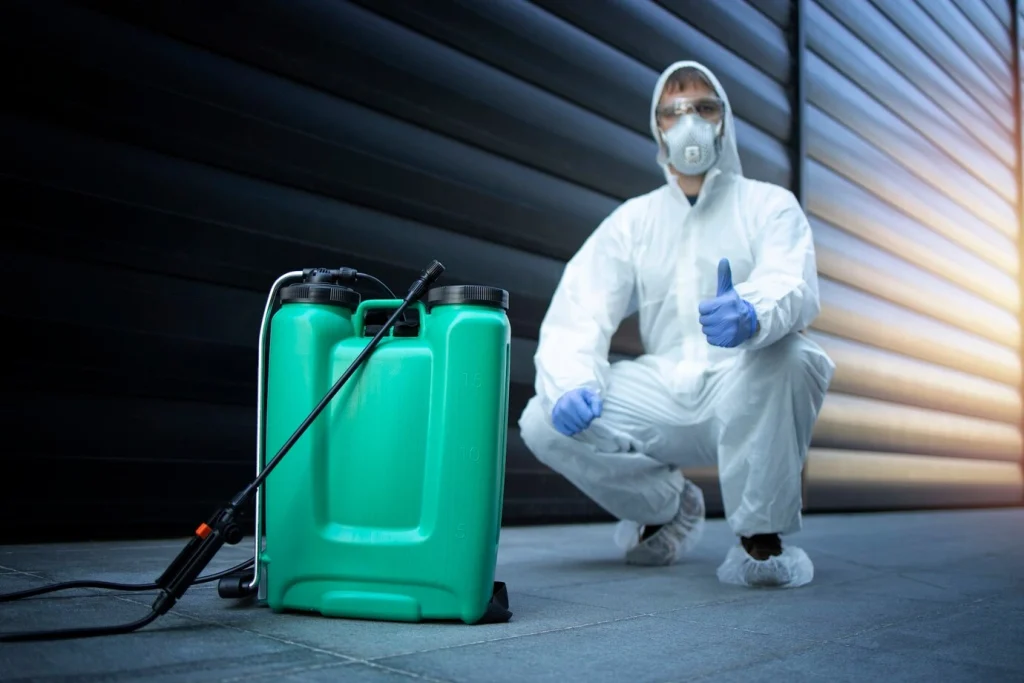

The terms disinfecting and sanitizing are often used interchangeably by most of us. However, they are not the same thing at all. Understanding the difference between these two terms is important for those interested in maintaining a hygienic environment.
In this blog, we will differentiate between disinfecting and sanitizing, and explain when each is appropriate, and help you choose the right one for your needs.
Why should I know the difference?
Well, in case you feel why should I need to know how one term is distinct from another, then you must realize that understanding the difference between these two processes will help you take the right steps to protect your workplace or your home.
Because if you have over-sanitized an area when disinfection was actually needed could leave harmful germs behind. Similarly, frequent over-disinfection could expose surfaces and individuals to unnecessary harsh chemicals, which can cause environmental and health impacts over time.
Professional cleaning agencies have trained cleaners who know how to strike the right balance using science-backed methods and products to create a safe, healthy environment for your space.
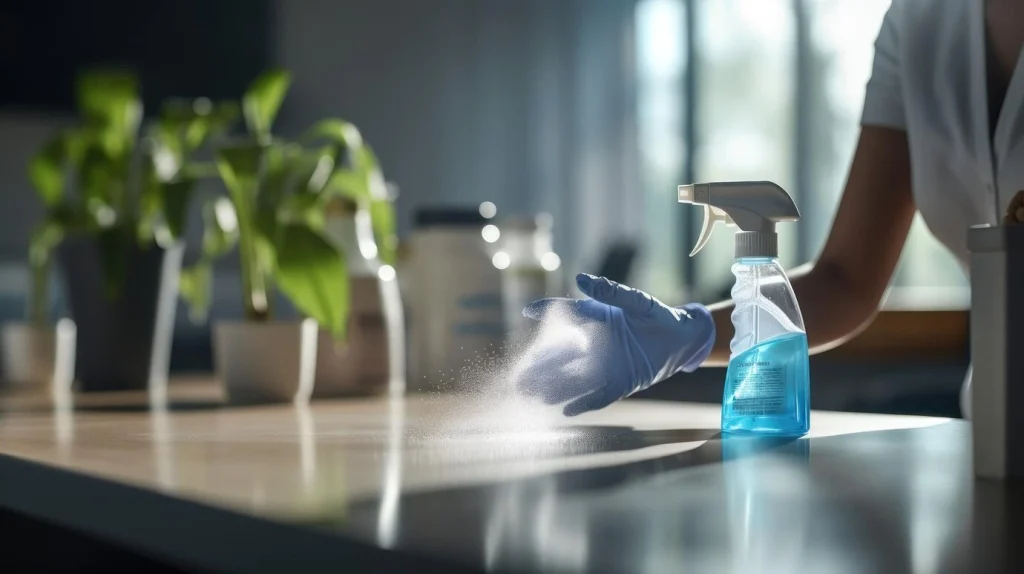
Is Sanitizing and Disinfecting the Same Thing?
Well the answer is no. While both of them aims to reduce the number of harmful germs present on surfaces, they do so in varying degrees and with different purposes.
Sanitizing is the process of reducing the number of bacteria on surfaces to a safe level, as per the public health standards. It doesn’t necessarily kill all viruses and fungi but certainly lowers the number of microbes to a level which is considered safe for human health. Sanitizing is commonly used in kitchens, schools, and areas where food is handled and prepared.
Disinfecting goes one step further than sanitizing. Since it involves using chemicals to kill a broader spectrum of microorganisms. These include bacteria, viruses, and fungi build up on surfaces. Disinfecting uses chemicals or disinfectants to kill germs on surfaces and objects. Some common disinfectants are bleach and alcohol solutions.
You must have heard this term alot during COVID. Because disinfection is critical in healthcare set-ups especially during outbreaks of contagious diseases where killing pathogens is essential in order to prevent transmission.

When Should You Sanitize vs. Disinfect?
Choosing between sanitizing and disinfecting depends on the environment to be cleaned and the level of exposure to contaminants.
Sanitize when:
- You’re dealing with surfaces that come into contact with food (like countertops, cutting boards and so on)
- Cleaning toys and play areas for children.
Disinfect when:
- There’s been exposure to any kind of bodily fluids or illness
- Cleaning bathrooms, medical facilities, or gyms
- A known outbreak or pandemic has affected an area
- There have been pest infestations or mold.
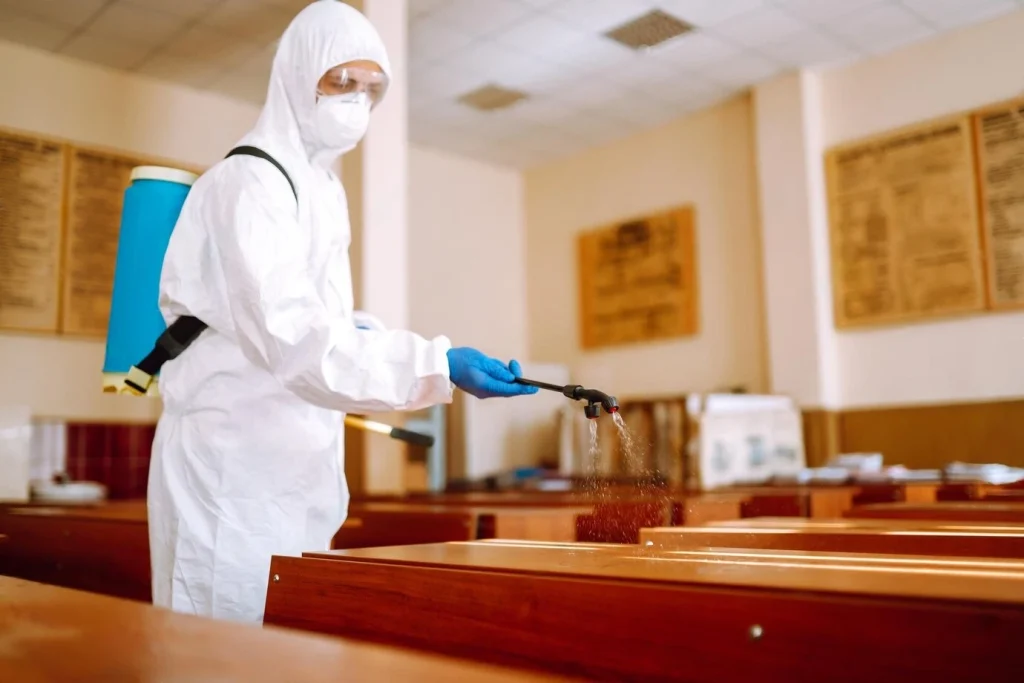
Disinfecting and Sanitizing Services
If you are wondering what do these two distinct services include, let us make it clear here that Professional disinfecting and sanitizing services go beyond everyday cleaning.
These services work on killing hidden germs, protecting the high-traffic areas, and adhere to the strict standards of industries like healthcare, hospitality, and food service.
A professional service may include:
Use of EPA-registered disinfectants and sanitizers.
Thinking what EPA means?
EPA-registered refers to such products which are tested and approved by the United States Environmental Protection Agency (EPA).
EPA evaluates these products for their effectiveness against specific pathogens, such as bacteria, viruses, and fungi, and their safety for use in various environments.
So when a disinfectant product is approved by EPA, it means that it has undergone rigorous testing to ensure it effectively kills or inactivates the pathogens listed on its product label, providing a standard level of protection against the spread of harmful microorganisms.

Surface testing to ensure effectiveness
Targeted cleaning of high-touch points like light switches, buttons in an elevator, door handles, keyboards, and handrails of a staircase.
High touch points are those areas that have the most frequent contact with hands or come in contact with people the most. These areas require more cleaning and disinfecting than others. Because even if they don’t seem visibly dirty to anyone, these places still hold the most unseen germs and bacteria that causes illness.
Electrostatic or fogging treatments for hard-to-reach areas.
Compliance with industry-specific hygiene regulations (e.g., FDA, CDC, OSHA)
It doesn’t matter whether you’re running a restaurant, an office, or maintaining a retail shop, hiring an expert cleaning provider ensures thorough disinfecting and sanitizing of your work area based on your specific needs.
Cleaning, Sanitizing, and Disinfecting
If you are confused about the order to be followed while Cleaning, Sanitizing, and Disinfecting. Let us dive in a little to know more! Because each step plays a unique role in maintaining a clean and safe space. Skipping any of these, especially in high-risk areas, can compromise hygiene and health of people coming in contact to that area!
Cleaning
This is the first and most basic step. Cleaning includes removing dirt, dust, and debris from surfaces using soap or detergent and water. You must know that while cleaning doesn’t kill germs, it does reduce their numbers and helps prepare surfaces for more effective sanitizing or disinfecting.
Sanitizing
After cleaning is done, sanitizing is done so as to lower the number of germs to a safe level. It’s typically used in environments where contact with food or skin is common. For example, wiping down a kitchen counter with a sanitizing spray reduces bacteria to a level deemed to be acceptable by health regulations.
Disinfecting
This is the most intense level of microbial reduction. Disinfectants are used to kill germs that persist after cleaning. This process is usually carried out for bathrooms, medical facilities, or high-touch surfaces.
Need professional disinfecting and sanitizing services for your home or business?
Anago cleaning systems make use of industry-approved solutions to ensure that your spaces are safe, spotless, and germ-free.
Anago Franchisees offer the Protection+ Disinfection® program, which includes three unique janitorial services plans that you can choose from based on the size of your office, the complexity of your needs, and your budget. These plans are recognized as the only certified disinfection plans in the commercial cleaning market and are designed to accommodate your unique requirements.
Anago Franchisees target all of the germiest areas of your property and use measures that help prevent germs, so you and your employees stay healthy.
With over 30 years of experience as a leader in the franchised commercial cleaning industry, Anago Cleaning Systems has perfected the art of clean.
FAQ's
Sanitizing lowers the number of germs on surfaces to a safe level, while disinfecting kills a wider range of germs, including bacteria, viruses, and fungi.
You should sanitize surfaces that come into contact with food, like kitchen counters and cutting boards, or items like toys and play areas where lowering germs to a safe level is enough.
Disinfecting is crucial in places like hospitals, gyms, and bathrooms, especially during illness outbreaks, because it helps kill harmful germs and prevents infection from spreading.
Yes, cleaning is the first step. It removes dirt and dust so that sanitizing or disinfecting products can work more effectively.
Professionals use tested and approved products, follow safety standards, and focus on high-touch and hard-to-reach areas to ensure deep and reliable cleaning.